It may be only in New England that you can drive from one of the most densely populated areas in the country to a place called “Moose Alley” in half a day. Somewhere a few hours north of the Massachusetts-New Hampshire border, you’ll start to notice the highways narrow and bend around rising hills and exposed granite. The forest closes in and you find that the spotty satellite service has replaced your map of numbered highways and gridlock with a fuzzy wall of woods and bogs. It happens faster than you think in the east. It’s a charm that is welcomed by those looking to step out for a bit.
I found a second wind on day four. A couple extra hours of sleep works wonders on a body that’s spent the last several sunrises to sunsets sweating in waders and a backpack, eating shit on steep banks, and unwittingly entering a caloric deficiency by eating mostly PB&Js for half of a week. Maine’s larger brook trout demanded time, and for a much-needed long weekend, we’d had time to give. I cracked my car door and swatted away the first round of biting flies. A few blackened logs still sat under our grill, and crumbs from the last of our food that had rolled away in the dark ringed the picnic table. The far side of the campsite’s clearing was already lit, burning off the dew and putting low clouds along the treeline.
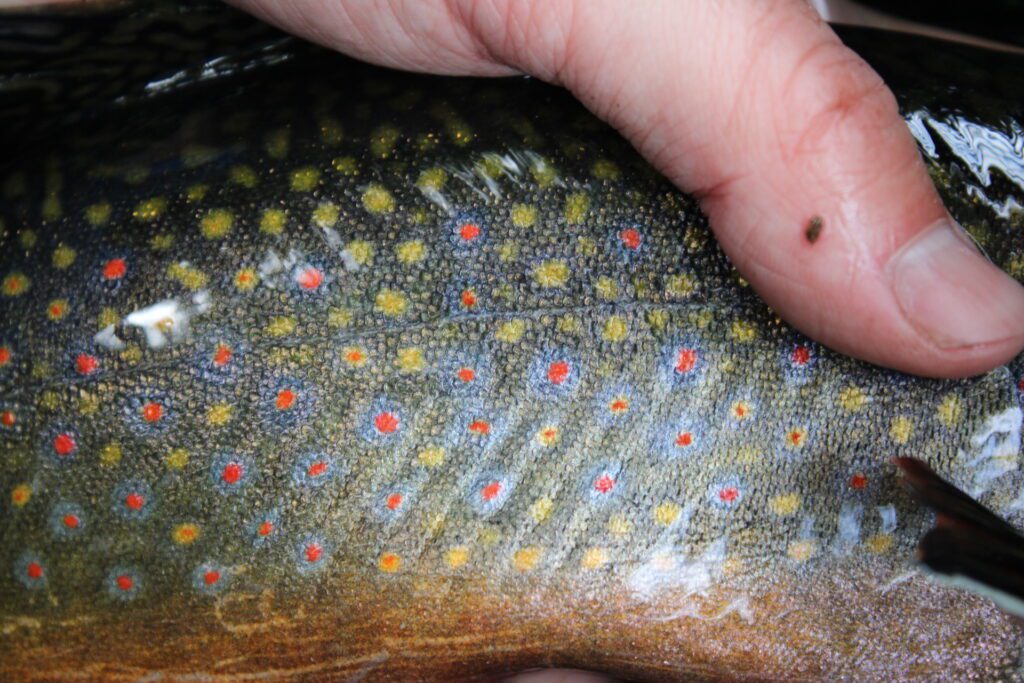
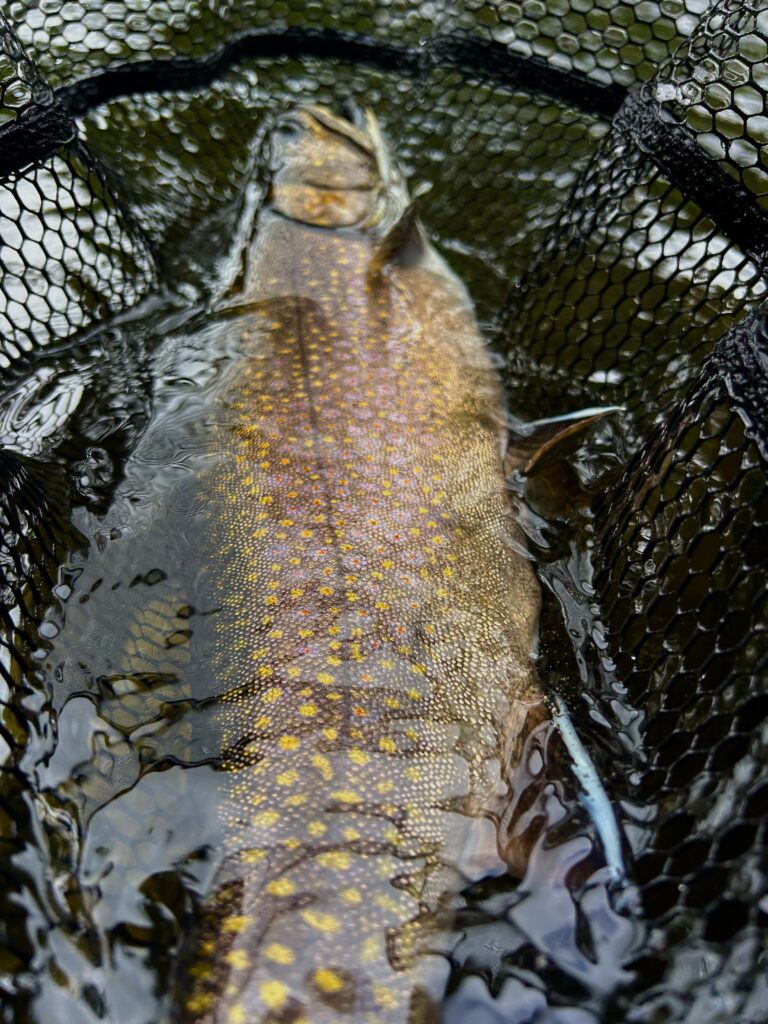
Some of the North Woods’ finest char had made it to the net. Even a few moose had been spotted during our dawn and dusk drives through the Alley. We’d done all we could do here. That feeling of satisfying calm at the end of a trip is rare and welcome to an angler that doesn’t always put himself on the most straightforward paths for success.
But the reverse drive where we’d watch the mountains flatten out, traffic increase in the heat of the day, and our likelihood of moose sightings drop to zero, made my blood pressure rise. A straight shot back to the city, away from whatever unstructured bliss this was, seemed cruel to a calmed mind. When Jon emerged from his tent with the same intentions, we packed the car, drove to the nearest town with service, and hatched a plan over a late breakfast of gas station sandwiches.
Now it’s mid-afternoon on Maine’s southern coast. The tide is just beginning to swirl into the furthest most gaps on the rocky point we’ve scaled. It’s in the eighties, with a comfortable light breeze blowing out of the west. The water is clean. Our trout gear has been swapped for eight and ten weights, and Jon and I are ferociously double-hauling over the dark boulder fields below the surface. I have no idea what I am doing.
That’s not entirely true. I’m used to that NYC striper fishing—nasty water, long, slow swings, cartoonishly scary-looking locals bombing casts shoulder to shoulder. Out here on the rocks, alone with the tide pools and the eelgrass, feels satisfyingly different. For the first time in several days of this fishing bender, I really don’t know what to expect.
I’m only a few casts in when I back off the front rock. The sea is really starting to move now, and I keep a healthy few feet from the ledge in my inexperience. I’m so hyper-aware of it all—my coily full-sink, the rising water line—that when the fish eats I lay into it without hesitation, no trout sets from the last few days lingering in my muscle memory.
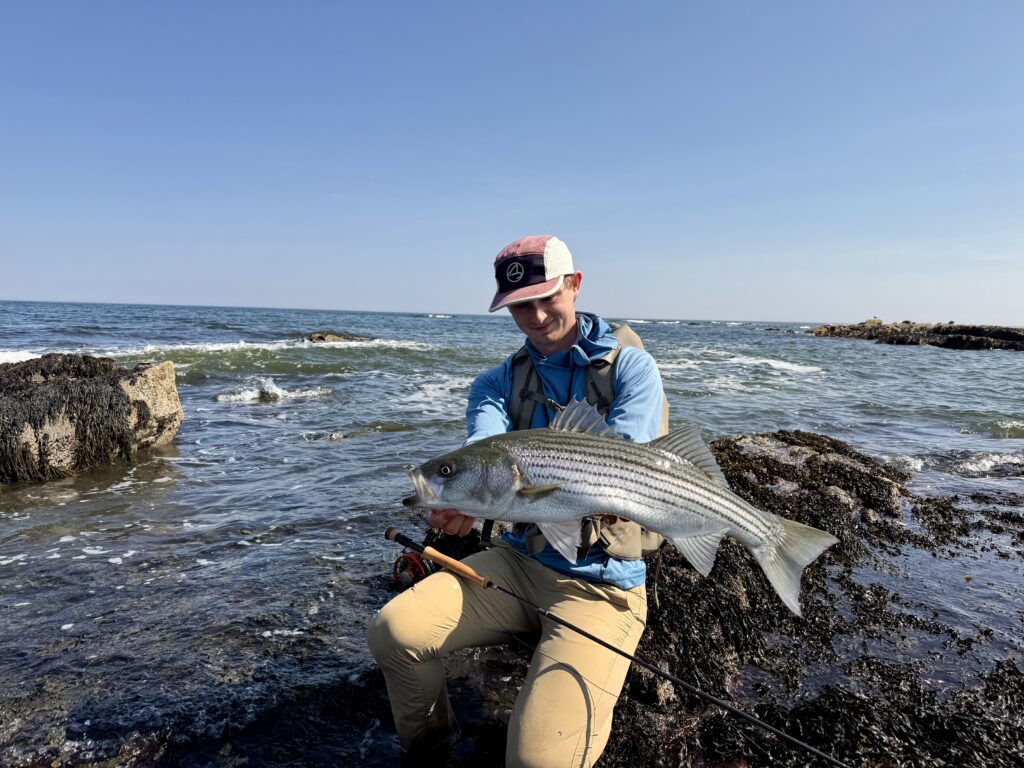
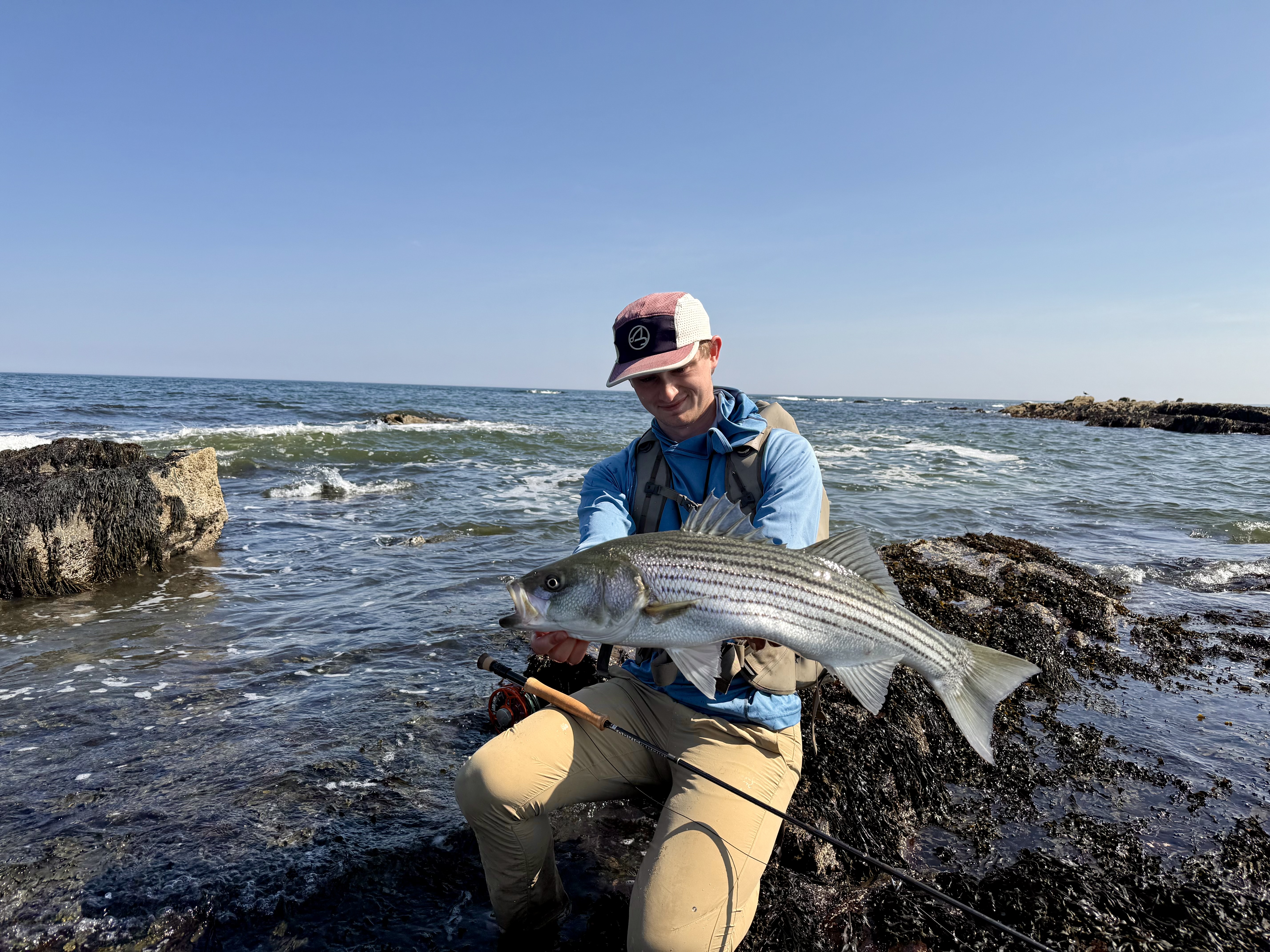
I guide the bass into a flooded tide pool for Jon to grab. It’s about 30 inches, clean, late sun sparkling the blue off its scales between the black and white… and all in a new spot to boot. Every fish feels better in a new spot. Every fish after a detour makes the drive worth it too, but as I gather my line from around the rocks, clean off my deceiver, and start casting into the deep again, I have the feeling that the stop would have been worth it regardless.
Naturally, we stay for a while. High tide has almost peaked by the time Jon and I call it and cruise out looking for dinner. There’s a strip mall we find on the way home with a place that sounds like it has great burrito bowls. It does.
Driving home in the dark makes our ride to the city easier to swallow. The sprawl gets hidden by the night, and the thin buffer of trees between highway and neighborhoods appear as deep as the North Woods. You could even still imagine seeing that moose in the quieter patches of roadside forest.
Fatigue sets in eventually. It did every night we wrapped fishing—I was falling asleep in my dinner most evenings—but this close to home, I don’t feel guilty about wanting a real bed. I crave it the same way I couldn’t wait all week for the drive north after work, the anticipation the night before we first hit the water, restless early mornings waiting for us all to rally. Then all of a sudden, whether I like it or not, I’m there.