I stumbled to my feet in horror, so fast that the water hadn’t yet soaked through my shirt to my skin. It wasn’t the surprise dunking, or the fact that my new-used Radisson canoe was half submerged, motor and battery side first, beneath the lake. What truly gave me chills, more than the wet morning Vermont air or the hangover, was the snap I’d heard as we’d gone down—the give of something that wasn’t supposed to go.
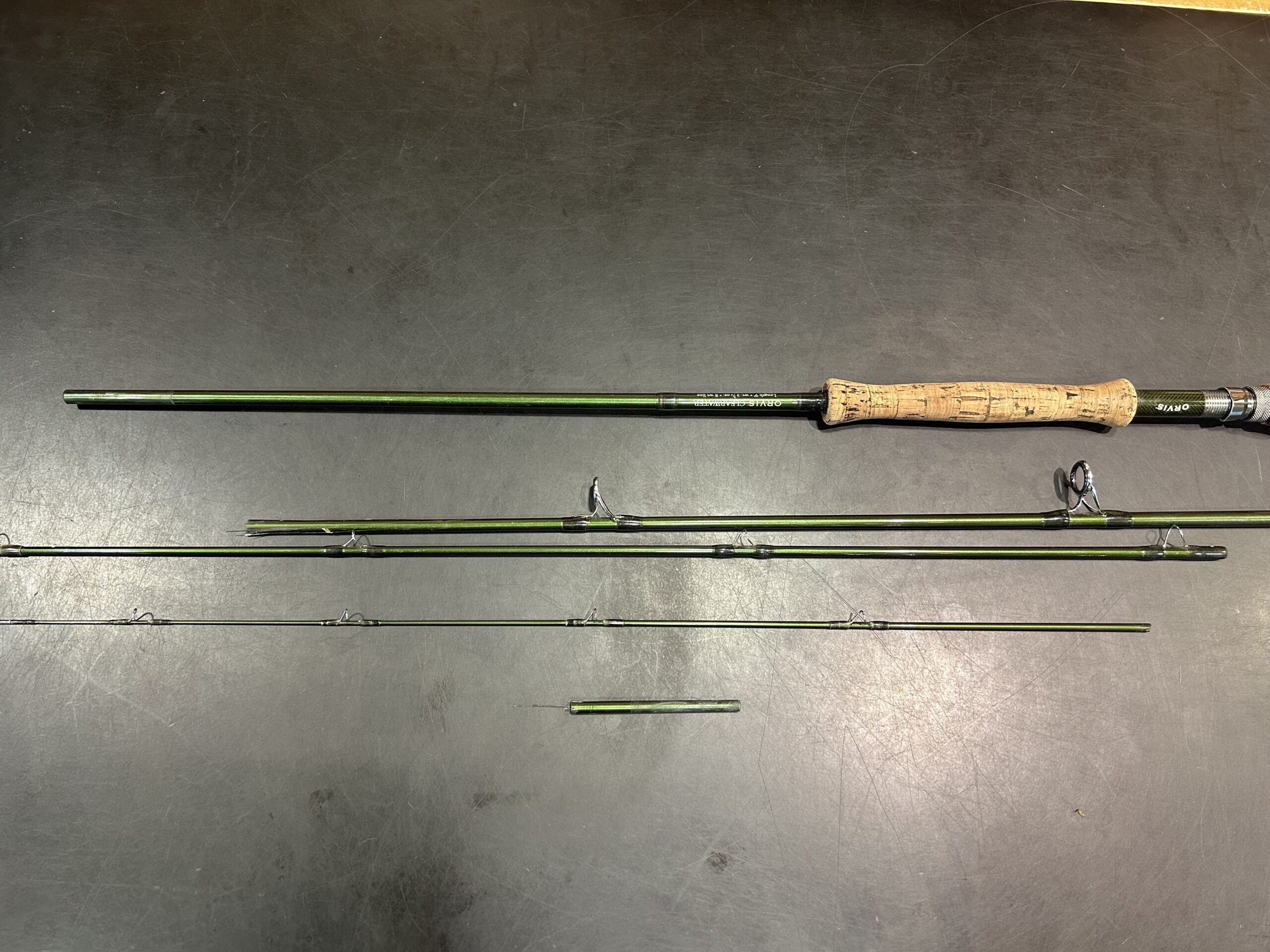
I tripped onto shore, unwrapped the head of the line from around my legs, and fielded the “I’m sorry, I’m sorry”(s) from my equally wet brother. The popper had somehow broken off in the fall, under enough tension to embed its 2/0 hook past the barb in the rubber of my sandal half an inch below my foot. But I found the leader, kept pulling until it tightened, and the pieces of my rod floated out from under the boat—one, two, three, four… five.
A life flashed before my eyes—walking out of the shop at fourteen, new rod tube in hand, wad of saved cash still in my pocket because in the end my dad wouldn’t let me spend it. He’d somehow convinced himself that this was a worthwhile investment, the same way I’d been duped into thinking that I needed this eight weight in my second year of fly fishing. It turned out the real barrier between me and my local carp and bass was my casting, but I at least had the right tools for when I figured that part out.
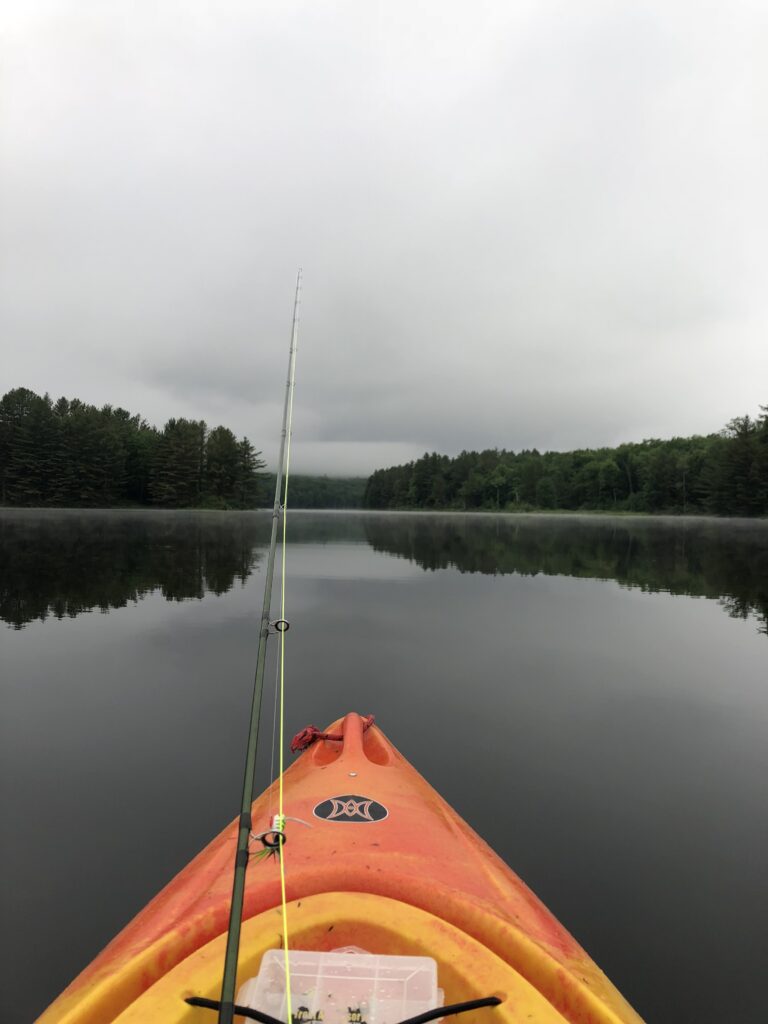
The lake dripping off me during this reflection was actually one of the first places I remember using the rod. My cousins had a cabin nearby, and my uncle and I would launch his kayaks off this point and fan out into the grassy bays. There are good largemouth here—I missed a lot of them. Casting big flies from a sitting position helped me fail fast, and when I moved to Vermont for college a few years later, fishing the eight came to me more naturally than talking to girls.
I caught my first lake trout on it, off the rocks on an angry Lake Champlain at 3am. When I staggered back into my dorm room that morning frozen in my waders, rod still half assembled, I found my roommate minutes away from reporting me missing.
There was the time my buddy Jack and I figured out how to catch bowfin on foot. They are territorial and fearless fish—if you crept up to the right one on a sandy flat and dangled the eight weight over their head, you had a good chance at a heart-stopping eat and an equally satisfying monster hook set.
In the final days before graduation, in that golden period between school and the world, a couple of friends and I had a banner spring day on a smallmouth stream. We were all so close by now, fished naturally together, and everything felt as perfect as a well-known fly rod, a heavy craw, and a five pounder out of a current seam.
I caught my first bull trout on the swing with it, right after I moved to Oregon. The Metolius, with its speed and depth and chill, was daunting for an outsider. But I knew this piece of gear, knew how it handled, when to push with it and work a fish I needed to put in the net. With my success in this new place, the rod embraced novelty with a familiar reassurance.
There are more of these moments, of course—routines and one offs, close calls and plenty of losses. Channel cats and stripers, new reels and line upgrades, all the feelings I felt on all the good days and bad days of my life I ever put that rod together and made a cast. I never really thought about the age, other than the odd “I’ve had this thing for a while, huh?” as I rigged it up occasionally. There were plenty of “nicer” rods out there when I first bought it, there are even more now, but it did everything I asked for. The rod stayed a treasured part of my fishing experience, so dependable it was often forgettable. Then I crushed the shit out of it.
My brother thanked me later that day for being so “calm” about the accident. I’d honestly surprised myself in the aftermath, given the value I placed on the rod and the fact that the whole thing wasn’t exactly my fault. I’d be kidding myself if I said I was planning for this, but with the amount of use the rod got I knew it would break one day. And call this reasoning a stage of grief, but I was almost glad it had happened on these waters.
When we pulled out and drained the boat, gathered the gear, and motored back across the lake towards my car, I had a chance to place myself again in the morning I enjoyed. The pond had fished better this weekend than I’d ever seen it. My brothers, cousins, and I had returned to this slice of Vermont as adults—for a couple of days we’d caught up, reminisced, and lived. We’d made plans to do it again next year—a new chapter was beginning. I looked from the misty hemlocks blurring by to the damp canoe bottom where I’d carefully laid the pieces of my eight weight. The phrase “one last ride” rolled through my head, and I reached for the butt end. I rolled the section around for a moment, shifted my casting hand into position on the worn cork, then set it back down and released.